Gatus: Self-Hosted Status Page and Uptime Monitoring
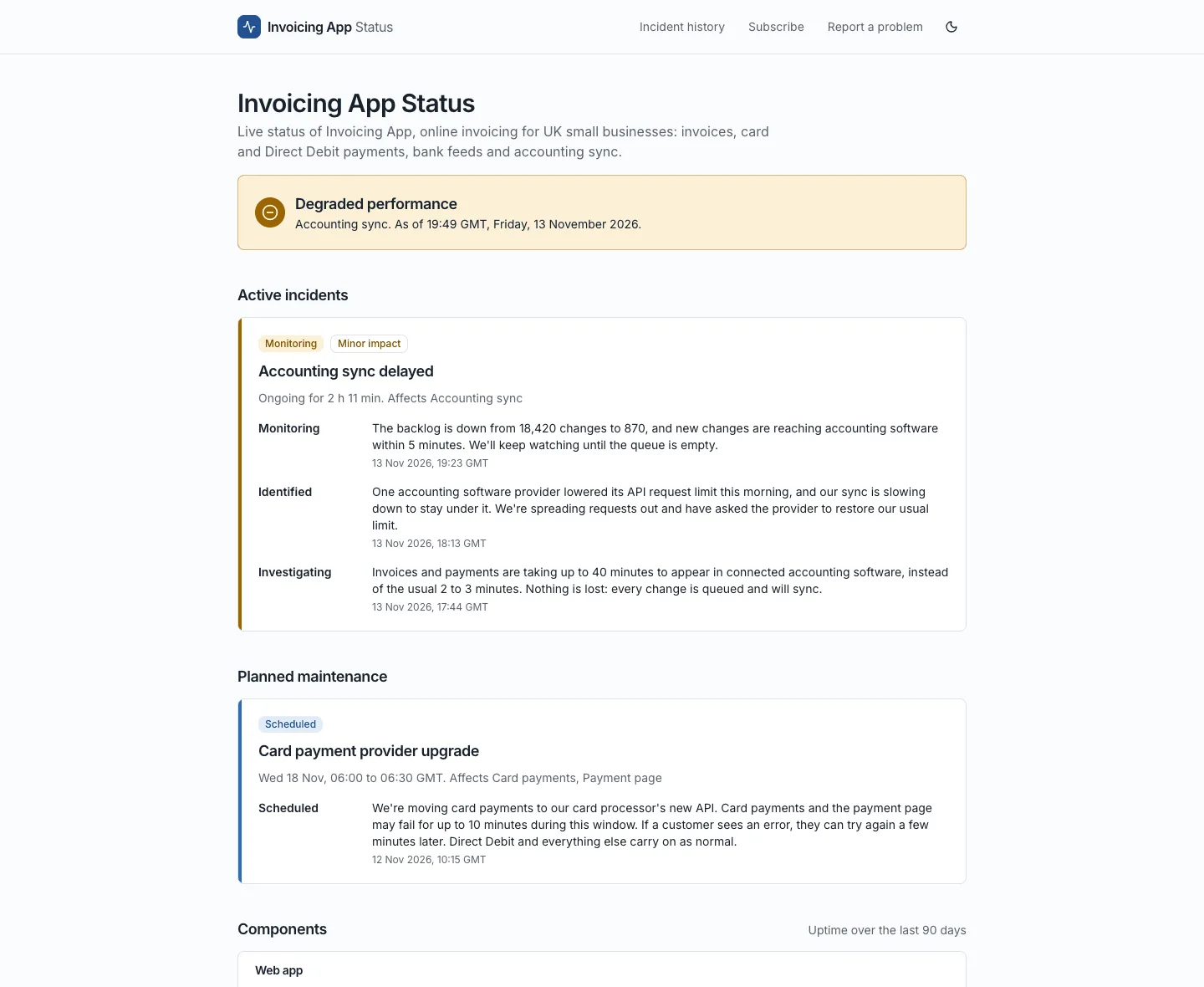
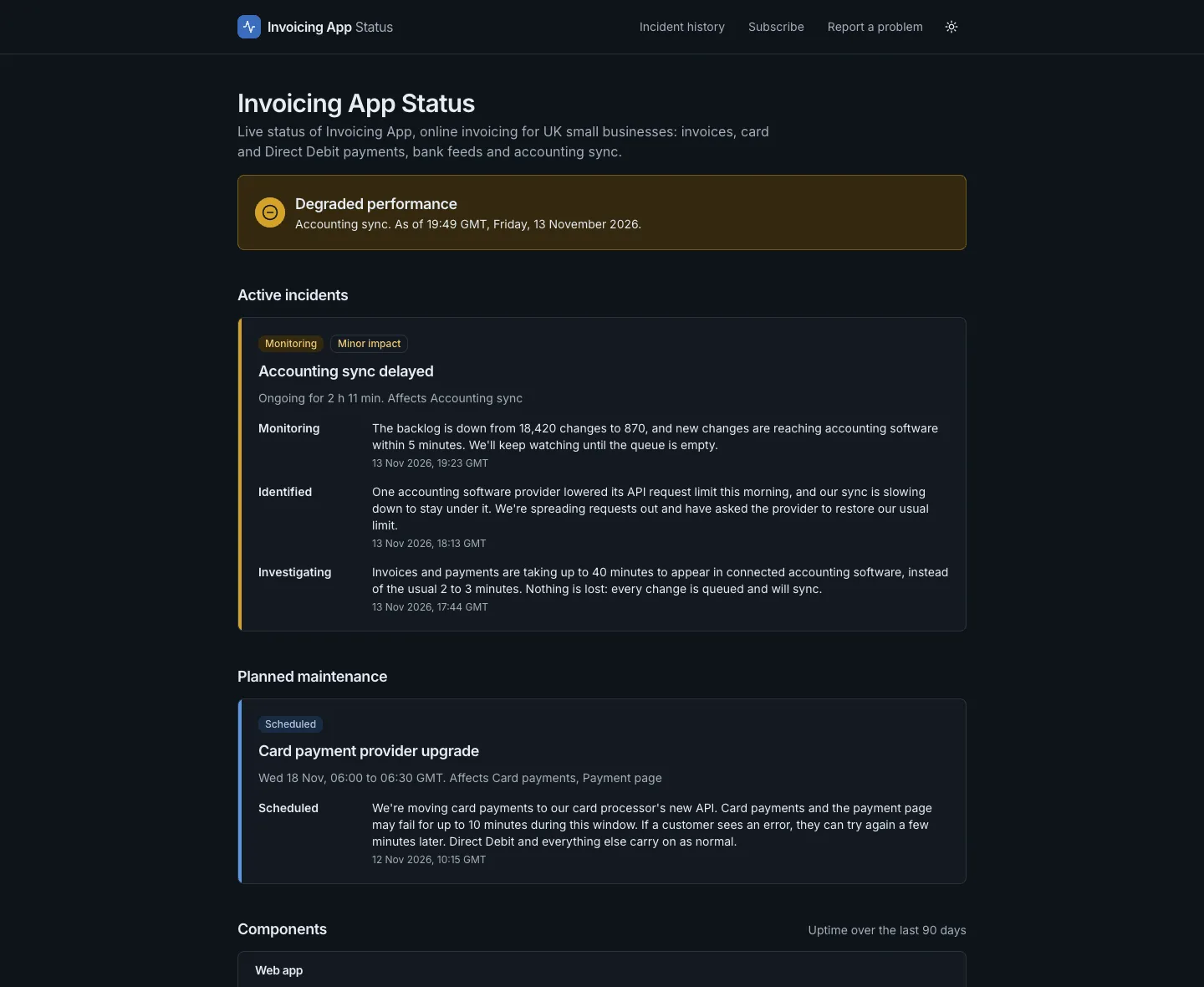
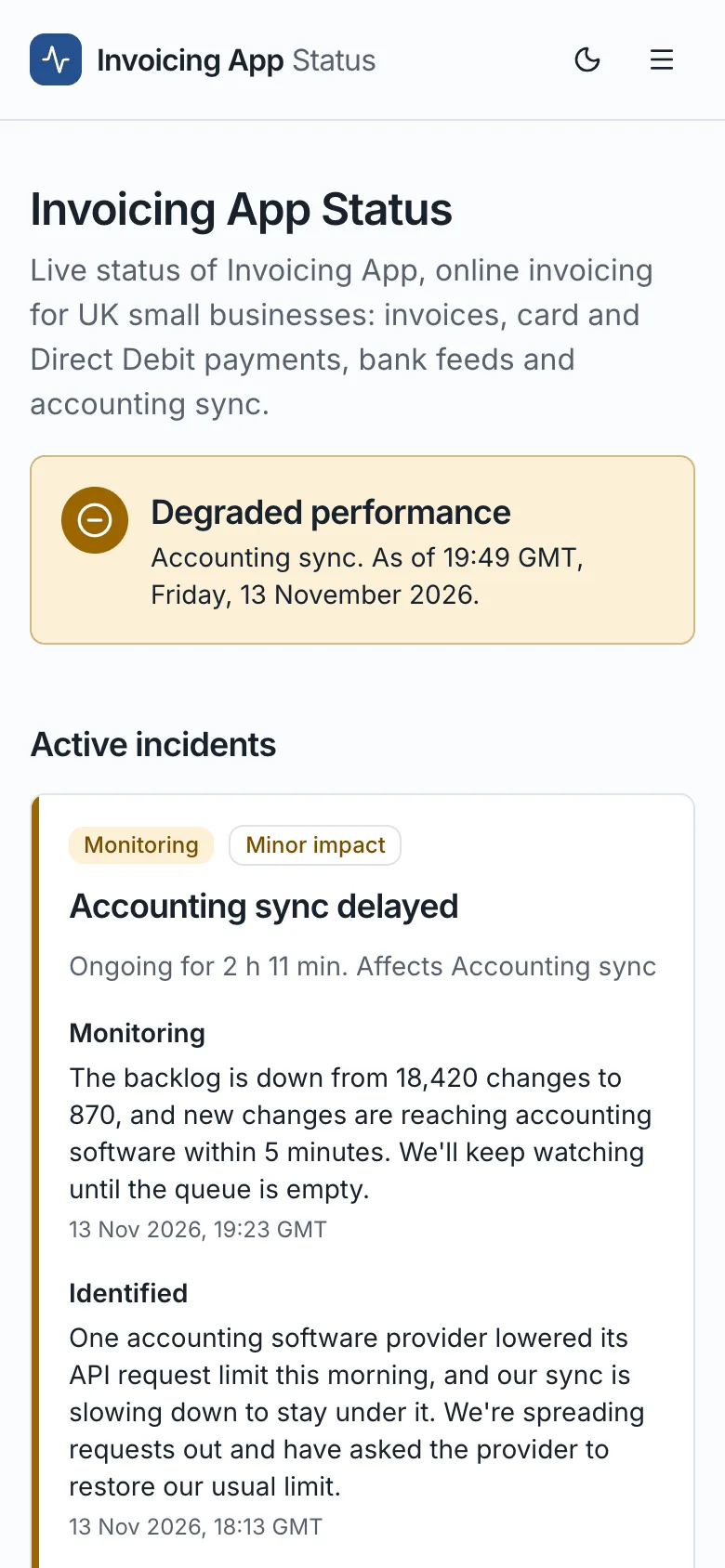
Gatus is an open-source uptime monitor and status page written in Go, packaged here with PostgreSQL so developers and small teams can watch their own websites and APIs in one click. It checks HTTP, TCP, DNS, TLS and certificate expiry on a schedule, shows uptime history and response times on a status page, and alerts Slack, Discord, Teams, PagerDuty or email, all configured in one YAML file.
by Light CloudDeveloper tools
Build a status page and uptime monitor with Gatus and PostgreSQL
Features
- The official Gatus 5.38.0 binary, pinned to an exact release, on Alpine 3.22.8 as an unprivileged user
- Checks over HTTP(S), TCP, DNS, TLS, STARTTLS, SSH, WebSocket and gRPC, each on its own interval
- Conditions on status code, response time, JSON body, headers, DNS answer and days until a certificate expires
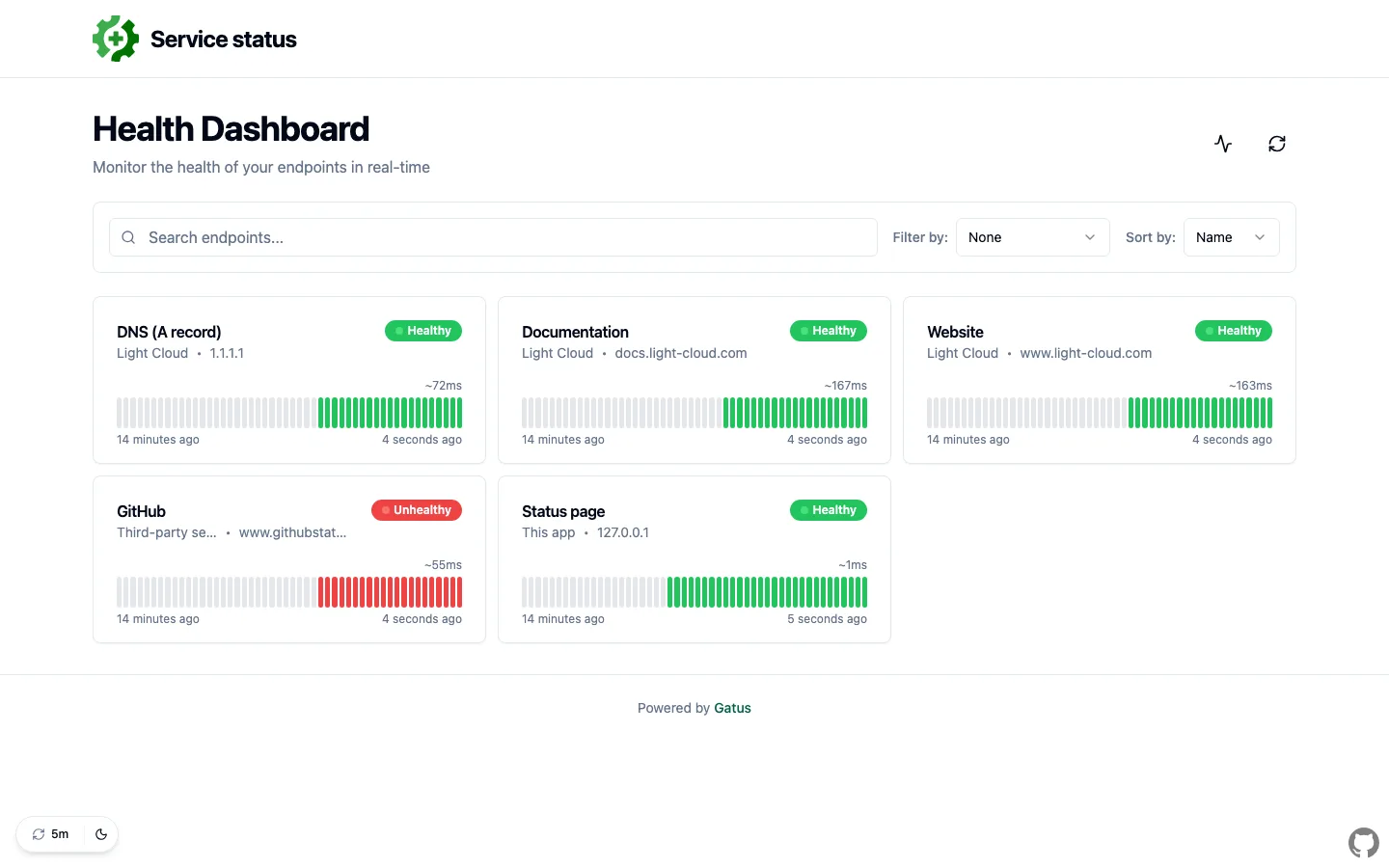
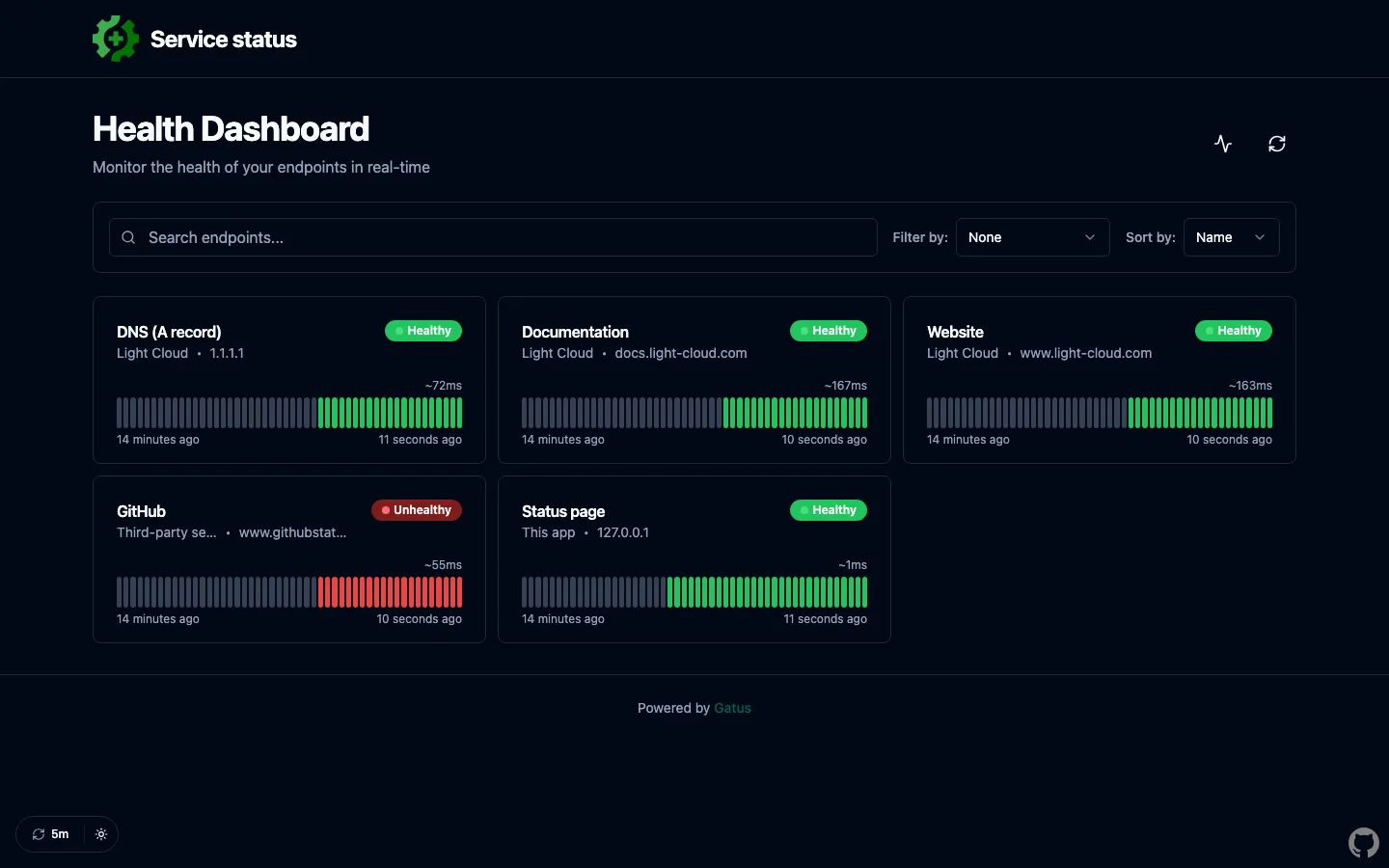
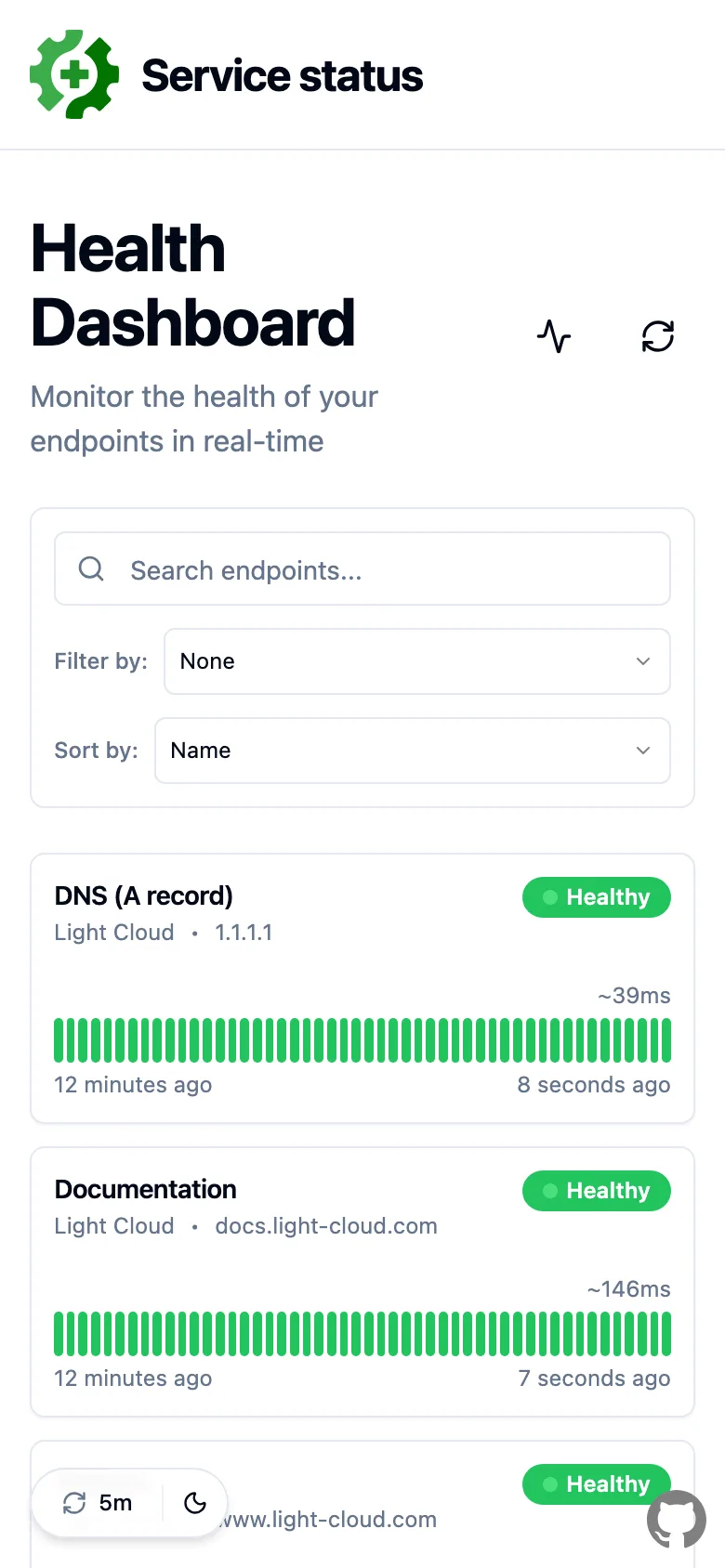
- A public status page with uptime history, response time charts, groups and badges you can embed
- Alerts to Slack, Discord, Microsoft Teams, PagerDuty, Opsgenie, Telegram and email, with resolve messages
- Every check lives in config.yaml, so a change is a commit, reviewed and deployed like code
- Results stored in PostgreSQL, so the history survives restarts and deploys
- Example checks that work on the first start: the page itself, a website, its docs, a DNS record and GitHub's status API
Tech stack
 Go
 PostgreSQL
 Alpine Linux
 Docker
What you need
- A paid plan: deploying creates a PostgreSQL database, which the Free plan does not include
- One always-on instance (minimum 1, maximum 1), billed for the whole month, so it is not a Free plan fit
- To run it locally: Docker, for the image and a PostgreSQL container
- Nothing to fill in: DATABASE_URL is set at deploy and the example checks start running
- Optional: alert secrets such as SLACK_WEBHOOK_URL, read in config.yaml; without them no alerts go out
About
This is upstream Gatus 5.38.0 by TwiN and contributors, under its own Apache-2.0 licence and unchanged: Light Cloud copies the official binary onto Alpine and packages it for a one-click deploy, nothing more. The checks, the status page title and the alert providers are all in config.yaml, where ${NAME} reads an environment variable, so a change is a commit and a push; the example checks watch light-cloud.com, its docs, a DNS record and GitHub's status API until you replace them. lightcloud/start.sh strips the URL parameters that Gatus's lib/pq driver rejects, leaving only sslmode. It must run as exactly one always-on instance (minimum 1, maximum 1), billed all month, because checks stop while an instance sleeps and a second instance would run every check and send every alert twice. The status page is public, since Gatus has no login unless you add a security block to config.yaml; ping (icmp) checks do not work in the container, so use TCP or HTTP checks instead; and every check runs from the app's one region.
FAQ
What is the best free self-hosted status page?
Gatus is a strong choice when you want checks and the status page in one small program with its configuration in Git: one binary, a YAML file and a database. Upptime and Uptime Kuma are the common alternatives; Uptime Kuma is configured through its web interface instead.
How do I monitor an SSL certificate expiry date with Gatus?
Add the condition "[CERTIFICATE_EXPIRATION] > 336h" to an HTTPS endpoint. The check turns unhealthy, and alerts fire, once the certificate has less than 14 days left.
How do I get alerts in Slack when a website is down?
Create a Slack incoming webhook, set it as SLACK_WEBHOOK_URL, add alerting.slack.webhook-url: "${SLACK_WEBHOOK_URL}" to config.yaml, and add an alert of type slack to each endpoint. Use send-on-resolved: true to hear when it recovers.
Why does my uptime monitor need to run all the time?
Checks are scheduled inside the monitor itself. If the server sleeps between visits or scales to zero, nothing checks your sites and no alerts go out, so a monitor needs one instance that is always running.
Can I make a Gatus status page private?
Yes. Add security.basic with a username and a bcrypt password hash, or security.oidc for single sign-on, to config.yaml; the whole page then asks for a sign-in.
- Price
- Free
- Framework
- Dockerfile · Docker
- Plan
- Lite or above
- Updated